Sonatha Script Font for Handmade Creators
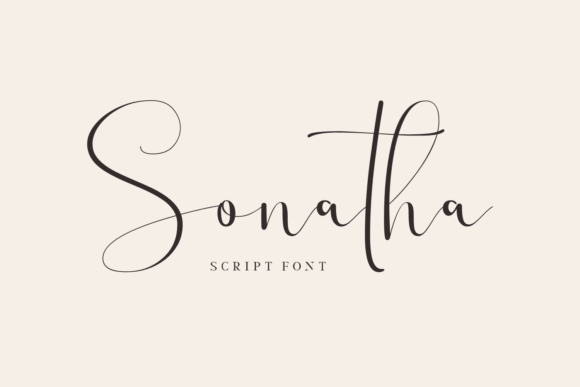
As a maker who designs printable invitations, hand-stamped tags, and custom labels for small-batch candles and soaps, I’m always searching for script fonts that balance beauty with real-world usability. That’s why Sonatha has quickly become one of my most-used typefaces in the Script Amp collection. It’s not just another delicate script—it’s a graceful, thin, and intentionally refined typeface built for creators who need elegance *and* clarity in their physical and digital products.
Sonatha exudes quiet confidence. Its fine strokes, subtle contrast, and gentle flow make it feel personal—like handwriting you’d trust to sign a wedding invitation or stamp on a boutique soap label. But unlike many ornate scripts, Sonatha avoids excessive flourishes that break down at small sizes or cause cutting errors in Cricut and Silhouette projects. That precision is exactly what makes it a practical premium font—not just decorative, but dependable.
Where Sonatha Shines in Physical Craft Projects
I use Sonatha across a wide range of tangible goods—and each time, it lifts the perceived quality of the final piece. On 1.5-inch kraft paper product tags? Yes. On heat-transfer vinyl for linen tote bags? Absolutely. On foil-stamped greeting cards printed through a local press? Every time. Here’s how it performs where it matters most:
- Candle & bath product labels: Sonatha’s light weight reads beautifully against matte black or cream labels—especially when paired with a clean sans serif for ingredients or scent notes. Its readability stays strong even at 10–12 pt in print.
- Wedding stationery: From “Mr. & Mrs.” on envelope liners to “Welcome” on farmhouse-style welcome boards, Sonatha adds warmth without looking overly formal. I’ve used it for chalkboard-style acrylic signs—and clients consistently comment on how “soft yet intentional” it feels.
- Stickers & die-cut decals: Because its letterforms avoid tight interior counters (like in “e” or “a”), Sonatha cuts cleanly on vinyl—even at 3/4 inch tall. No lost details, no bridging issues.
- Seasonal packaging: For holiday mugs, gift box wraps, or mini ornament tags, Sonatha brings festive charm without visual clutter. Try “Joy” or “Gather” in Sonatha over a textured kraft background—it’s instantly inviting.
Real-World Readability Tips for Makers
Let’s be honest: not all script fonts survive the jump from screen to shelf. With Sonatha, I’ve tested it across multiple production methods—and here’s what works:
- For small stickers (under 1 inch), keep phrases to 1–3 words. “Love,” “Handmade,” or a single name reads clearly without thin strokes disappearing in print or cut.
- On product labels, pair Sonatha with a sturdy sans serif like Montserrat or Poppins for body text. This maintains brand consistency while ensuring compliance info stays legible.
- In SVG files for cutting machines, convert Sonatha to outlines first—and double-check spacing between letters before exporting. Its natural rhythm means minimal manual kerning is needed for most short headlines.
- For digital printables like planner pages or quote art, Sonatha shines at 24–36 pt as a focal headline. Avoid using it for full paragraphs—it’s a display font, not a workhorse text face.
Smart Pairings That Elevate Your Brand Identity
A great script font only reaches its full potential when paired thoughtfully. With Sonatha, contrast is your friend. Its delicate nature calls for structure—so I almost always pair it with something grounded:
- Sans serif companions: Inter, Lato, or Open Sans provide clean contrast for pricing, descriptions, or footer text—ideal for Etsy shop banners or printable templates.
- Serif anchors: A warm serif like Playfair Display or Merriweather adds richness without competing. Use Sonatha for a title (“Spring Collection”) and the serif for subhead (“Hand-poured • Small Batch • Made in Oregon”).
- Avoid pairing with other scripts: Two expressive fonts cancel each other out. Save Sonatha for moments where personality needs to lead—and let supporting type handle clarity.
Licensing, Files, and What You’ll Actually Get
Sonatha comes with full commercial licensing—meaning you can use it in client work, sell physical goods with it (like mugs or T-shirts), bundle it into digital downloads (SVGs, Canva templates, PDF planners), and even include it in editable design assets sold on Creative Market or Etsy. Just be sure to review the license terms for redistribution limits—most Script Amp fonts allow embedding in static PDFs but restrict font file resale.
The file package typically includes OTF and TTF formats, basic OpenType features like standard ligatures and stylistic alternates (great for avoiding repeated “a” or “t” shapes in longer words), and often multilingual support covering Western European languages. If you’re designing for bilingual markets—or creating inclusive wedding stationery—this expands your reach without extra font swaps.
Why Sonatha Fits Your Making Rhythm
You don’t choose a script font just because it looks pretty on a mockup. You choose it because it supports your process: quick to set, reliable in production, and resonant with your customers’ sense of care and intention. Sonatha delivers that. It doesn’t ask you to compromise between delicacy and durability—or between creativity and commerce.
Whether you’re laser-engraving Sonatha onto wooden spice jars, printing it on recycled cardstock for baby shower invites, or layering it into a layered SVG for a nursery wall quote—it holds its own. Not flashy. Not fussy. Just quietly, consistently beautiful.
If your shop thrives on handmade authenticity and thoughtful presentation, Sonatha isn’t just another font in your library. It’s a tool that helps your customers *feel* the care behind every item you make.